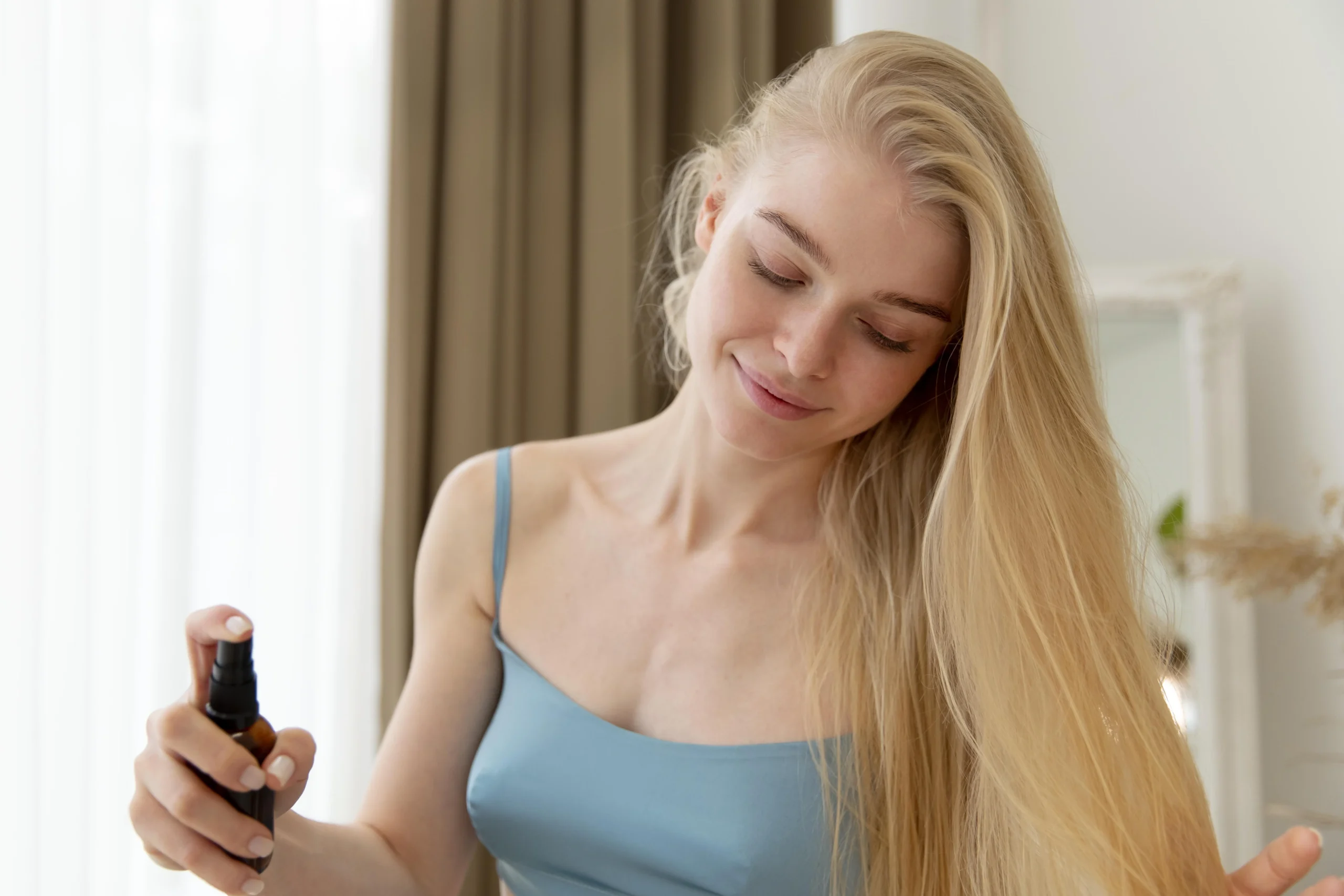
Why Moisturizing is Essential for Every Hair Type 2026
For years, I believed that hair problems—dryness, frizz, breakage, dullness, even scalp irritation—were all separate issues that required separate solutions. I used to treat them the same way many people do: more oils, more masks, stronger treatments, clarifying shampoos, or repair products that promised instant results. But the longer I worked hands-on with different hair types and studied how hair actually behaves, the more I realized something that changed the way I approach hair care completely:
Moisturizing is essential for every hair type in 2026 because it keeps the cuticle sealed and the cortex hydrated, which maintains strength, elasticity, and shine. Modern routines like frequent washing, heat styling, and harsh shampoos strip moisture, causing dryness, frizz, breakage, and scalp irritation. Proper hydration supports healthier hair and a balanced scalp.
That realization didn’t come from reading a single study or trying a trendy product. It came from years of touching hair, observing how it responded, feeling the difference between strands that were hydrated from within and strands that were simply coated on the outside. When hair is properly moisturized, it behaves in a way that is unmistakable—soft yet strong, shiny but not greasy, flexible instead of brittle, calm instead of frizzy. And when it isn’t, no amount of oils, serums, or protein treatments can compensate for that missing hydration.
Why Hair Needs Moisture in the First Place
When I talk about moisturizing hair, I’m not referring to something optional or cosmetic. I’m referring to a biological requirement that affects the structure, strength, and long-term health of every strand. Over the years of studying different hair types and working closely with consumers, I’ve realized that most people don’t actually understand why moisture matters. So I want to take you beneath the surface, literally, and explain what happens inside your hair when moisture is present — and what happens when it’s missing.
To understand this, we need to start with the structure of a single hair strand. Each strand is made of layers, and two of them are especially important. The outer layer, called the cuticle, is built like overlapping roof tiles that protect the hair. Beneath it lies the cortex, which provides the hair’s strength, shape, and flexibility. When the cuticle lies flat, moisture stays sealed inside the cortex, allowing your hair to stay soft, elastic, and smooth. But if the cuticle becomes raised — which can happen from heat styling, chemical treatments, UV exposure, or even brushing — moisture escapes easily, leaving the cortex dry and vulnerable. Dry cortex = weak hair. It’s really that simple. This is why I always tell people that softness isn’t just a “texture preference.” Softness is a sign that your hair’s internal structure is hydrated and healthy.
Your scalp also plays an important role in maintaining moisture. It produces natural oils (sebum) that are designed to travel along the hair shaft and protect it from moisture loss. But these oils don’t move evenly across all hair types. Straight hair allows oils to move quickly from roots to ends, which is why it can look greasy more easily. Curly and coily hair, on the other hand, have bends and spirals that slow this process down, making them naturally drier. That’s why hydration isn’t just helpful — it’s essential for textured hair. Even if you have straight or fine hair, your ends can still become dry because natural oils rarely reach that far. So I always look at natural oil distribution as part of the bigger picture: your scalp oils support moisture retention, but they cannot replace real hydration.
What makes things even more challenging today is the way modern lifestyles disrupt the hair’s moisture balance. Most people wash their hair more often than they need to. Many shampoos still contain strong surfactants that cleanse aggressively, stripping away oils that your hair actually needs for protection. Heat tools are part of daily styling for so many of us, and UV exposure, air conditioning, hard water, coloring, bleaching, and smoothing treatments all weaken the cuticle and take moisture out of the cortex. Even well-meaning steps, like using anti-dandruff or clarifying shampoos, can unintentionally dry the hair if they’re not paired with proper hydration. I often hear people say, “My shampoo cleans well but makes my hair feel rough,” or “My curls used to be softer but now feel stiff.” These aren’t random issues — they are classic signs of moisture imbalance caused by modern routines.
When the hair is properly moisturized, everything changes. A hydrated cortex bends without breaking, which is why moisturized hair has better elasticity, moves naturally, and resists damage. The cuticle stays smoother, allowing light to reflect evenly, creating shine without the need for silicone overload. Moisturized hair detangles more easily, styles more predictably, and even appears fuller because the strands are flexible, not brittle. The scalp benefits too; a well-moisturized environment helps reduce irritation, dryness, and surface-level flaking. This creates the right conditions for strong, healthy hair growth over time.
If there is one idea I want you to take away from this section, it’s this: moisture is not a styling perk — it is a biological necessity for hair strength. Without it, the cortex weakens, the cuticle lifts, and the entire hair fiber becomes more fragile. With moisture, the strand becomes resilient, shiny, soft, and easier to manage. No matter your hair type — straight, wavy, curly, coily, fine, thick, or gray — proper hydration is the foundation that everything else depends on.
What Happens When Your Hair Does Not Get Enough Moisture
Whenever I look at someone’s hair — whether it’s in person, through photos they send me, or during product consultations — one of the first things I try to evaluate is the hair’s moisture level. And I say this from years of experience: nearly every common hair complaint I hear traces back to moisture loss, not genetics or “bad hair.” Lack of moisture quietly weakens the entire hair fiber, and once that process starts, the symptoms show up one by one. Many people don’t even realize how all these signs connect to hydration. So let me take you through, in detail, what I see happening inside the hair when moisture disappears.
The earliest and most obvious sign is dryness and brittleness. When the cortex — the inner layer of your hair — loses water, it becomes rigid instead of flexible. I’ve had people describe their hair to me as “crispy,” “straw-like,” or “rough no matter what I do,” and it always takes me back to the same root cause: the cortex is dehydrated. Think about a dry sponge — it cracks easily, it doesn’t bend, and it feels rough. That’s exactly what happens when the hair loses moisture at a cellular level. Instead of having a soft, pliable structure, the hair becomes stiff and vulnerable to even the smallest stress.
As the dryness worsens, the hair begins to develop frizz and a rough, uneven texture. And here’s something many people misunderstand: frizz is not a natural part of curly or wavy hair; it’s a moisture imbalance. When the cuticle lifts because the hair is thirsty, it tries to grab moisture from the air. That’s when the little flyaways pop up, curls lose their shape, waves look fuzzy, and straight hair develops a halo of static. In my experience, when someone tells me, “My frizz is out of control,” what they’re really telling me is, “My cuticle is lifted and searching for moisture.”
Without enough hydration, the hair also becomes prone to breakage and split ends, and this is something I see constantly — even in people who think they take great care of their hair. A moisture-deprived strand cannot stretch; it snaps. Sometimes people think they’re experiencing hair loss, but when I ask them to observe whether the fallen strands are long (shedding) or short (breakage), the truth becomes clear. Breakage usually shows up as little pieces of hair on the bathroom counter, near the sink, or on a brush. Split ends appear when the cuticle is too damaged to protect the cortex, causing the strand to split into two or three thin, fragile pieces. If I could show you how often I see this under magnifying tools, you’d be shocked — dryness literally tears the hair from within.
Another consequence of moisture loss is the dull, lifeless appearance that so many people struggle to fix with oils and shine serums. I always remind people that shine is not a product — it is a structural reflection. When the cuticle is smooth and hydrated, it reflects light beautifully, just like a polished surface. But when moisture is missing, the cuticle lifts and becomes jagged. Light scatters instead of bouncing back, and the hair begins to look matte, tired, or even grayish in tone. I’ve seen clients become frustrated, thinking they need more styling products, when the real solution is simply hydration inside the cortex, not coating the outside with more oil.
Then there’s the issue of manageability, which is something I hear about almost daily. When hair lacks moisture, it stops cooperating. It doesn’t hold curls, it refuses to stay smooth, it becomes puffy, stiff, or strangely flat, and it often needs twice as much effort to style. People tell me, “I feel like I’m fighting my hair every morning,” and it’s true — dehydrated hair behaves unpredictably because it has no flexibility. Moisturized hair bends and adapts; dry hair resists movement, just like a dry leaf compared to a fresh one.
One of the most frustrating consequences — and something I personally see all the time — is increased tangles and knots. When the cuticle is raised from dehydration, the strands cling to each other like Velcro. Even gentle brushing becomes painful. You may hear that soft snapping sound when combing wet hair or find small broken pieces in your hand. These are signs that the cuticle has lost its smoothness and slip. When someone tells me their hair seems to “tangle instantly,” I always think: this is moisture loss at the microscopic level.
And finally, I want to talk about the scalp, because moisture loss isn’t just a hair issue — it’s a scalp issue too. When the scalp barrier is dehydrated, it becomes tight, itchy, sensitive, or flaky. Many people come to me assuming they have dandruff, when what they really have is dry scalp — which behaves very differently from fungal dandruff. A dry scalp often looks slightly pink, feels uncomfortable after washing, and may flake only in specific areas (usually near the hairline or crown). It’s the same principle as dry skin anywhere else on the body: without proper hydration, the protective barrier becomes weak, irritated, and reactive. I’ve seen people switch shampoos repeatedly, thinking they’re reacting to ingredients, when their scalp simply needed moisture.
Whenever I see this combination of dryness, frizz, breakage, dullness, tangling, and scalp irritation, I know the moisture balance has collapsed. And if there’s one message I want to make clear from what I’ve seen over the years, it’s this: lack of moisture affects both the hair and the scalp, and it affects them quickly. Moisture isn’t a luxury or a nice-to-have extra — it is the foundation of strong, healthy, manageable hair. Everything else builds on top of it.
Why Moisturizing Matters for Every Hair Type
When I first started studying hair care in depth, one of the biggest lessons that surprised me — and something I still repeat to clients today — is that every hair type needs moisture, but each type needs it in its own way. People often assume that only curly or textured hair requires hydration, or that oily hair somehow doesn’t benefit from moisture. From what I’ve seen over the years, this couldn’t be further from the truth. Every hair type, no matter how straight or curly, depends on hydration to keep the cuticle smooth, the cortex flexible, and the entire strand resistant to daily stress. The difference lies in how much moisture the hair can hold, how quickly it loses hydration, and how the natural oil distribution behaves. Let me break down what I’ve observed with each hair type and why moisturizing matters deeply for all of them.
Straight Hair
When I talk to people with straight hair, I often hear the same sentence: “My hair gets oily fast — I don’t think I need moisture.” And this is where I usually pause, because straight hair is one of the easiest types to misjudge. Yes, straight hair can become oily at the scalp more quickly, because natural oils travel down its smooth shaft with almost no resistance. But in my experience, straight hair is also the hair type that gets dryest at the ends without people realizing it. Because the strand is smooth, dryness can hide in plain sight. It shows up not as a “dry look” but as flipped ends, small pieces that break easily, or frizz that appears during humidity even when the roots are oily.
Whenever I analyze straight hair strands, especially under bright light, I can clearly see small lifted cuticle areas near the ends — a sign of dehydration. Heat styling is another major factor. Straight hair is often heat-styled more frequently (flat irons, curlers, blow-dryers), and the heat removes internal moisture from the cortex long before the damage becomes visible. When clients tell me their straight hair suddenly feels unmanageable or won’t lie smooth, I explain that lightweight hydration is actually its first line of defense, not a burden. Moisture gives straight hair elasticity so it doesn’t snap, shine so it doesn’t look dull, and softness so it doesn’t feel stiff and “pokey.”
Wavy Hair
Wavy hair has its own personality — and I say that with love, because I’ve worked with many people who have waves with inconsistent patterns across their head. Waves tend to lose moisture in specific areas, most commonly at the mid-lengths and ends. When I run my fingers through wavy hair, I often feel two textures at once: a smoother upper portion and a drier, slightly frizzier section toward the bottom. This is because the bends in wavy hair slow down oil distribution from the scalp, but not as dramatically as in curly hair.
What I’ve observed over time is that waves collapse or puff depending on hydration levels. When wavy hair gets enough moisture, the S-shape becomes defined, soft, and uniform. When it doesn’t, waves stretch out, lose structure, or turn into a loose, shapeless volume. Many clients tell me, “My waves only look good on the first day,” and moisture — not curl-enhancing products — is usually the missing ingredient. Balanced moisture helps waves form into smooth, cohesive patterns instead of frizzy, uneven pieces.
Curly Hair
Curly hair has always fascinated me because of how differently it behaves compared to straight or wavy hair. The curls act like natural “barriers” that slow down the travel of scalp oils, which is why curly hair tends to feel dry even when the scalp is normal or oily. When I gently stretch a curl between my fingers, I can often tell immediately whether the cortex is hydrated — hydrated curls spring back with energy, while dry curls stay stretched, lose shape, or form brittle, inconsistent ringlets.
One of the biggest insights I share with curly-haired clients is that curls don’t form properly without moisture. The curl pattern itself relies on hydration to clump, coil, and hold its natural form. Without enough moisture, curls shrink unevenly, feel rougher, and develop halo frizz. I’ve seen many curls transform dramatically once moisture is restored: what used to look like “frizzy hair” suddenly reveals well-defined spirals that were there all along — just hidden behind dehydration.
Coily or Kinky Hair
Coily or kinky hair (the tightest curl type) is the most moisture-dependent hair profile I’ve worked with. The tight coils create multiple turning points along the strand, and each turn is a spot where moisture can escape more easily. Natural oils rarely make it past the first few inches, which means the ends are almost always dry by default. But what stands out to me most is how delicately strong this hair type is. It can lift, stretch, and form the most beautiful textures — but it snaps quickly when dehydrated.
When I evaluate coily hair, I look closely at shrinkage. Healthy shrinkage is a sign of elasticity, but shrinkage combined with a rough texture often tells me the cortex is dehydrated. Coily hair thrives when it is deeply moisturized — thick creams, leave-ins, and weekly conditioning are not optional but essential. Every time I guide someone with coily hair through a proper hydration routine, the transformation is striking. The hair becomes softer, more defined, easier to separate, and noticeably stronger. Moisture is not just beneficial for coily hair — it is foundational.
Fine Hair vs. Thick Hair
Thickness also plays a huge role in moisture behavior, and I always take this into account. Fine hair has a smaller diameter, which means its cortex holds less moisture. This is why fine hair becomes limp so easily and why heavy conditioners often overwhelm it. But here’s something I always explain to clients with fine hair: even though fine hair needs lightweight formulas, its need for moisture is real. Without it, fine hair becomes static-prone, fragile, and easily tangled. Water-based hydration — like hydrating sprays or lightweight conditioners — is usually the sweet spot that brings back softness without collapsing volume.
Thick hair is the opposite. The wider the strand, the more moisture it can hold — and the more moisture it needs. Thick hair often looks dense, full, and strong, but it can become incredibly coarse when dehydrated. I’ve worked with thick-haired clients who thought they had “unruly” or “wiry” hair, when in reality the cuticle was simply under-moisturized. Once thick hair receives deep, consistent hydration, it becomes smoother, softer, and dramatically more manageable.
Mature or Gray Hair
Mature hair tells its own story, and I’ve learned to pay close attention to the signs. As the scalp ages, oil production naturally slows. Gray hair also undergoes structural changes — the cuticle becomes more porous, the strand loses smoothness, and the texture often becomes wiry or coarse. I’ve had clients who were shocked to discover that their hair wasn’t “getting worse with age,” but simply becoming drier because their scalp was producing less protective oil.
What mature or gray hair needs most is consistent, steady moisture, not just occasional conditioning. When I help older clients build a hydrating routine, the difference is dramatic: gray hair becomes softer, smoother, and far easier to style. Moisture gives mature hair its flexibility back, making it feel youthful and vibrant again.
How Moisturizing Supports Scalp Health
One thing I’ve learned after years of working with different hair and scalp types is that most hair problems actually start at the scalp, not along the hair shaft. We often think of moisture as something that belongs only on the hair lengths, but in reality, the scalp is the living foundation that decides how healthy your hair can be. When people come to me with concerns about weakness, breakage, thinning, frizz, or chronic dryness, I rarely start by examining the ends. I always begin at the root — literally. A healthy, hydrated scalp behaves in predictable, stable ways. A dehydrated scalp, however, reacts like irritated skin anywhere else on the body: it becomes tight, flaky, inflamed, and less capable of supporting strong growth. Understanding this connection between scalp hydration and hair quality has shaped the way I teach people to care for their hair.
From my perspective, one of the most important roles of moisture is how it creates a strong, resilient environment for the hair follicle. Every hair strand grows from a follicle embedded in the scalp, and each follicle needs hydration to stay flexible and nourished. When I look at a healthy scalp under magnification, I can see that the skin around the follicles is smooth and slightly plump — a sign that the barrier is intact and hydrated. This allows nutrients to travel easily to the root and ensures the follicle is anchored in a soft, supportive environment. But when the scalp is dehydrated, the skin tightens around the follicles. I’ve observed that this tightness can restrict nutrient flow, making the roots more fragile and more likely to shed prematurely. Many people blame genetics or stress for increased shedding, but in countless cases I’ve seen, restoring scalp moisture dramatically reduces the amount of hair that falls out.
Another major sign of dehydration — and something I see almost daily — is irritation, redness, and dandruff-like flaking. This is where most people get confused. They see flakes and instantly assume they have dandruff caused by a fungus (Malassezia). However, the flakes caused by dryness look and behave differently. Dryness flakes are usually small, white, powdery, and fall off easily when the scalp is scratched lightly. They often appear near the hairline or crown and worsen after washing. When I touch a dehydrated scalp, the skin often feels slightly rough, almost like dry facial skin. Clients often tell me, “My scalp feels tight after shampooing,” which is one of the clearest signs of moisture imbalance. When we add hydration back — through gentler shampoos, humectants, or lightweight scalp moisturizers — the irritation calms down incredibly fast. I’ve seen people who lived with chronic itchiness for years find relief in just a week once the scalp barrier was repaired.
Scalp moisture also plays a surprisingly important role in balancing natural oils. This is a detail people don’t always connect, but I see it constantly: dehydrated scalps often become more oily, not less. The skin tries to compensate for the lack of moisture by producing more sebum. This creates a confusing situation where the scalp feels greasy, but the lengths remain dry and brittle. Clients often come to me thinking their hair is “too oily,” and they wash more frequently, which only makes the dryness — and the excess oil — worse. Once I help them restore scalp moisture, their oil production becomes more consistent and less extreme. A hydrated scalp doesn’t panic. It produces oils at a steady, healthy rate. This allows the roots to stay fresh longer and makes the entire hair routine easier to manage.
One of the most overlooked benefits of a well-hydrated scalp is how it improves long-term growth retention. There’s a difference between hair growth (new hair coming out of the follicle) and growth retention (your ability to keep that hair on your head long enough to reach length). I’ve met people who swear their hair “doesn’t grow past their shoulders,” but when I examine their scalp and hair, it’s clear that the problem isn’t lack of growth — it’s that dry, irritated follicles release the strands before they reach their full length. A hydrated scalp keeps the follicle environment stable and allows hair to stay rooted longer. I’ve seen clients who struggled with thin, fragile strands suddenly experience thicker, denser growth once the scalp’s moisture balance was restored. It’s one of the most rewarding transformations to witness.
What I also remind people is that the scalp is a living organ, and it behaves like one. Just as dry facial skin becomes sensitized, flaky, or inflamed, the scalp reacts similarly when it lacks moisture. Some people even experience a burning or tingling sensation when their scalp is extremely dry — something I’ve witnessed many times, especially in individuals who use harsh shampoos or wash excessively. Reintroducing moisture calms this reactivity, strengthens the skin barrier, and creates a more harmonious relationship between scalp and hair.
When I pull together all these observations — the healthier follicles, the reduced flaking, the balanced oils, the improved comfort, the stronger root anchoring — the conclusion becomes incredibly clear: moisturized hair begins with a moisturized scalp. Without a hydrated foundation, even the best hair treatments or conditioners can only go so far. Once the scalp is nourished, everything built on top of it becomes easier: styling, retention, shine, softness, and even overall hair confidence. Understanding this connection is one of the most powerful shifts you can make in your hair-care approach.
The Benefits of Moisturizing Across All Hair Types
Whenever I talk about moisture in hair care, I’m always careful to emphasize that I’m not referring to a superficial “soft and shiny” effect. What I’m talking about is something much deeper — the way hydration changes the structure, behavior, resilience, and long-term survival of every single hair strand. After years of evaluating different hair types, I’ve come to recognize hydration as one of the most powerful levers a person can pull to transform their hair, regardless of texture or condition. And each time I help someone restore moisture to their hair routine, the improvements show up faster and more dramatically than almost anything else. Let me walk you through the benefits I’ve consistently observed, in detail, so you can understand just how foundational moisture truly is.
One of the first and most immediate changes I see is that moisture prevents dryness and brittleness at the core of the hair shaft. Dehydrated hair feels stiff, hollow, and fragile — almost like a dry leaf that crumbles when bent. I often ask people to gently pull on a strand: hydrated hair stretches; dehydrated hair snaps. That simple test alone can tell me exactly what the cortex is missing. When I work with clients who complain that their hair “just won’t behave,” it’s usually because the cortex lacks the water it needs to stay flexible. The moment the hair receives adequate hydration — not oils or butters, but actual moisture — it becomes more supple, more responsive, and more alive. This is why moisture is always the first thing I address when someone is dealing with chronic dryness.
Hydration also has a profound impact on breakage and split ends, two issues I see constantly. Hair with enough moisture bends under pressure. When you brush it, when you tie it back, when you curl it, when you sleep on it — hydrated hair can endure those movements without tearing. But when hair is dehydrated, the cortex becomes so rigid that even the smallest tension causes the fiber to break. I’ve had clients send me photos of “hair loss,” and once we examine the strands closely, the pieces are often short fragments from breakage, not long shed hairs. Split ends also form when the cuticle is dry and lifted, exposing the inner cortex to friction. With proper moisture, the cuticle lies flat, creating a natural protective shield that helps the ends stay intact for much longer. This often means fewer trims, fewer breakage points, and a noticeably fuller look over time.
One of the most rewarding changes I see — and one that clients appreciate immediately — is how moisture improves shine and softness. True shine doesn’t come from coating hair in oil. It comes from the smoothness of the cuticle surface. When I examine well-hydrated hair under light, the cuticle tiles lie flat and reflect light evenly, almost like a clean mirror. This creates that natural, healthy glow that serums alone can’t replicate. Softness works the same way. Dry hair feels rough because the cuticle is lifted and jagged. Hydrated hair feels silky because the surface is smooth and the cortex inside is plump and elastic. I’ve had clients tell me that their hair feels “younger” or “like it used to in high school” after they reintroduce moisture — that’s how deeply hydration affects texture.
Another benefit that people often underestimate is how hydration enhances manageability. When hair is hydrated, it behaves. It detangles easily, styles more predictably, and keeps its shape throughout the day. I can always tell when someone’s hair is dehydrated because they describe their routine as a constant battle — brushing takes forever, styling requires tons of product, hairstyles fall apart within hours, and the hair seems to do the exact opposite of what they want. Moisturized hair, on the other hand, has a smooth glide. It doesn’t snag, doesn’t tangle instantly, and doesn’t require excessive force to move or shape. Many people discover that simply restoring moisture cuts their styling time in half, because hydrated hair wants to cooperate.
The benefits become even more dramatic in people with natural texture. Moisture is what maintains curl or wave patterns, and I’ve seen this firsthand hundreds of times. Waves need moisture to hold their S-shape. Curls need hydration to clump and form spirals. Coils depend on moisture to avoid excessive shrinkage and to maintain their natural definition. I’ve watched clients believe their curl pattern was “gone,” only to see it return beautifully once moisture was restored. When textured hair lacks hydration, it frizzes, flattens, or puffs out unpredictably. But when it is properly moisturized, the natural pattern becomes consistent, symmetrical, and visually stunning. Moisture doesn’t just support curls — it reveals them.
Moisture also plays a major role in balancing the relationship between hydration and oil production. Many people think their scalp is “too oily,” but what I often see is the opposite — the scalp is dehydrated and overproducing oil to compensate. When hair lacks moisture, the sebaceous glands get the signal to produce more sebum. This creates greasy roots and dry ends, one of the most common imbalances I see. Once moisture is restored — to both the scalp and the hair shaft — the oil glands calm down. The scalp stops overreacting. The hair stays fresher longer. And the lengths remain soft instead of brittle. A properly moisturized scalp and hair system is one of the most stable and low-maintenance routines a person can have.
Finally, one of the most significant benefits — and one that many people don’t connect to moisture — is that hydration creates healthy conditions for long-term growth. Hair doesn’t just need to grow; it needs to survive the months and years it takes to reach longer lengths. Dry hair breaks long before you see the results of your growth cycles. A healthy, moisturized strand has the strength to remain intact. And a moisturized scalp has the calmness and nourishment needed to help follicles anchor hair securely. I’ve seen countless clients go from “My hair never grows” to “I can’t believe how long it’s gotten” simply because hydration allowed the hair to retain the length it was already growing.
When I put all these benefits together — stronger strands, fewer breakages, more shine, easier styling, defined texture, balanced oils, and stronger growth — it becomes impossible to ignore the role moisture plays in hair health. In fact, I often tell people this: hydration is the foundation that every other part of your hair routine depends on. Without it, your hair works against you. With it, your hair works with you.
How to Choose Moisturizing Products Based on Your Hair Type
One thing I’ve learned after years of helping people rebuild their hair health is that moisturizing products only work when they match the needs of your specific hair type. I can’t count how many times someone told me, “Moisturizers don’t work for me,” when the real issue was that they were using the wrong kind of moisture. Hair behaves like a living fiber — it absorbs what it needs, rejects what it doesn’t, and sends very clear signals when it’s unhappy. The key is learning to listen to those signals. That’s why I always start this conversation with a simple truth: different hair types require different kinds of hydration, and once you match the right product to the right type, everything changes.
Over time, I’ve developed a way of observing hair that helps me identify exactly what kind of hydration it needs. When I touch the strands, I pay attention to how they bend, how they glide between my fingers, how they respond to combing, and how quickly they absorb product. All of these micro-behaviors tell me whether the hair requires light hydration, deep moisture, scalp-focused care, or a balance of moisture and protein. Let me walk you through how I approach each category, so you can make smarter, more confident decisions about your own moisture routine.
Lightweight Moisture for Fine or Straight Hair
When I work with fine or straight hair, the first thing I remind people is this: your hair needs moisture just as much as anyone else’s — it just needs the right kind. Fine hair can become oily at the roots but incredibly dry at the ends. Straight hair often appears soft but hides dehydration deep in the cortex. And because these hair types get weighed down easily, heavy creams or oils often make them look flat, greasy, or lifeless.
This is why I reach for lightweight, water-binding ingredients — hydrating elements that absorb into the hair without leaving residue.
Hyaluronic acid is one of the best examples. I love how it acts like a microscopic sponge: it attracts water from the air and locks it into the hair fiber. When I glide a hyaluronic acid serum onto fine hair, I can immediately feel the difference — the strand feels plumper but not coated.
Glycerin works similarly, but it’s slightly more flexible in how it interacts with the air. For straight hair, glycerin is wonderful because it restores softness without heaviness. It smooths the cuticle without weighing it down.
Panthenol (Provitamin B5) is a favorite of mine because it not only hydrates but also lightly strengthens. I often recommend it for fine hair that snaps easily; panthenol adds resilience without flattening the style.
And aloe brings hydration along with a cooling, soothing effect on the scalp — ideal for people who wash often or use heat styling.
With these hair types, the goal is simple: give the hair the moisture it needs without collapsing its natural volume. When done correctly, the result is airy softness, fewer flyaways, smoother movement, and healthier ends — all without that weighed-down look that fine or straight hair tends to fear.
Rich Moisture for Curly, Coily, and Thick Hair
Curly and coily hair have taught me more about moisture than any textbook ever could. These hair types are naturally drier because the curl pattern slows the journey of natural oils from the scalp down the hair shaft. Thick hair, regardless of curl pattern, has a larger diameter and therefore requires more moisture to keep the cortex supple.
When I touch curls or coils that are dehydrated, I can feel it immediately — the strands feel tight, rough, or “tense,” almost as if they’re resisting movement. This is when rich moisture becomes not just helpful, but absolutely necessary.
Shea butter is one of the most transformative ingredients for curls. It creates a soft cushion around the hair shaft while delivering long-lasting hydration. I’ve seen curls go from frizzy and undefined to beautifully clumped and bouncy simply by reintroducing shea butter into the routine.
Cocoa butter is slightly more occlusive, which means it locks in moisture incredibly well. I often recommend it for coily or kinky textures that struggle with moisture loss throughout the day.
Coconut oil, which can penetrate into the cortex, is especially powerful for strengthening the inner structure. I’ve watched coconut oil revive hair that felt brittle, helping it regain elasticity and strength.
Jojoba oil mimics natural scalp oil, making it perfect for thick hair that needs softness but not heaviness.
For these hair types, I look for formulas that feel creamy, rich, and nourishing — products that the hair “drinks in” rather than products that simply coat the surface. When thick or textured hair gets enough moisture, it becomes more cooperative, more defined, and dramatically easier to style.
Scalp-Focused Moisture
One mistake I see all the time is people focusing exclusively on moisturizing their hair while completely neglecting their scalp. The scalp is living tissue — it gets dehydrated, irritated, and imbalanced just like the skin on your face. And when the scalp lacks moisture, everything else begins to deteriorate: growth slows, flakes appear, irritation intensifies, and the roots become weaker.
To fix this, I focus on hydration—not oiling the scalp. Hydration is water-based; oil is not.
Hyaluronic acid scalp serums are one of the most exciting developments in modern hair care. They hydrate deeply without clogging follicles, and people with dry, tight, or irritated scalps often feel relief within days.
I also rely heavily on soothing, hydrating conditioners, especially ones with panthenol or aloe. When applied close to the scalp (but not directly on the roots for oily-prone individuals), these conditioners help restore comfort and balance.
Then there are tea tree + hydrating blends, which I recommend for people who experience both dryness and irritation. Tea tree keeps the scalp clean, while hydrating ingredients prevent the dryness often caused by clarifying or anti-dandruff routines.
A hydrated scalp supports stronger follicles, calmer skin, and healthier growth — something I’ve seen firsthand many times.
Protein vs. Moisture — Understanding the Difference
One of the biggest mistakes I see people make is confusing dryness with protein damage — because both can make the hair feel weak. But the solutions are very different. So when I analyze hair, I always check whether it needs moisture or protein first.
Dry hair lacks water. It feels rough, brittle, dull, and stiff. It snaps quickly. Moisture fixes this.
Hair needing protein feels soft but overly stretchy. When wet, it feels almost gummy or limp. It doesn’t hold a curl or style. Protein fixes this.
I think of it like this:
- Moisture gives hair its flexibility.
- Protein gives hair its strength.
Most people need a combination of both, but the balance depends heavily on hair type. Curly and coily hair usually need more moisture. Fine or color-damaged hair often needs more protein. Thick hair often needs both in cycles.
Once you understand this distinction, choosing the right product becomes intuitive — and the improvements become noticeable almost instantly.
How to Create a Moisture-Balancing Hair Routine (2026 Edition)
When I help people rebuild their hair health, one of the first things I explain is that moisture balance isn’t something you achieve by accident — it’s something you build through routine. Hair is constantly losing hydration through heat, sun exposure, friction, shampooing, and even indoor environments. If your routine doesn’t actively replace that moisture at every stage, your hair ends up in an endless cycle of dryness, frizz, brittleness, and breakage. Over the years, I’ve crafted a moisture-balancing routine that works reliably across all hair types because it follows how hair actually behaves on a biological level. Below is the version I personally guide clients through today — and the version I use myself. It’s not complicated, but it is intentional, and once you follow it consistently, the transformation becomes undeniable.
Step 1 — Use a Gentle, Hydrating Cleanser
When someone tells me their hair is always dry no matter what they do, I immediately ask what shampoo they’re using. Shampoo is supposed to cleanse your scalp — not strip it. Yet most people unknowingly rely on harsh surfactants that remove not only dirt and oil but also the moisture that keeps the cuticle smooth. I’ve seen hair go from “frizzy after every wash” to “soft even before conditioner” simply by switching to a gentler cleanser.
A hydrating shampoo is the foundation of a moisture-balanced routine. I always look for shampoos that contain mild cleansing agents (like sodium cocoyl isethionate or sodium lauroyl methyl isethionate) paired with hydrators like glycerin, panthenol, or aloe. When I lather these onto the scalp, I can feel how the foam doesn’t strip the hair — instead, it cleans while maintaining slip. The scalp feels refreshed, not tight or squeaky, and the lengths feel pliable rather than rough. If your hair feels “too clean,” almost squeaky or rigid right after shampooing, that is a sign your cleanser is pulling out too much moisture.
Avoiding harsh surfactants is especially important in 2026. With more exposure to environmental stressors, the scalp’s moisture barrier is already under pressure. A gentle cleanser supports that barrier instead of damaging it.
Step 2 — Condition Every Wash Day
I always tell people this: conditioner is not optional. Conditioner is the structural reset after shampoo. Even with a gentle cleanser, the act of washing naturally lifts the cuticle slightly. Conditioner smooths it back down, replenishes hydration, and fortifies the strand so it can handle daily movement.
I can always feel the difference between hair that is conditioned regularly versus hair that skips this step. Conditioned hair feels like satin between the fingers. It glides, it bends, it has that subtle “bounce” when you flick the ends. Unconditioned hair feels hollow, coarse, and resistant. It snags, tangles, and breaks during brushing.
When teaching clients, I always emphasize applying conditioner from mid-length to ends — the most dehydrated parts of the hair. I recommend leaving it on for a few minutes, allowing the hydrating ingredients to penetrate. A good conditioner doesn’t just make your hair soft today; it builds moisture resilience over time.
Step 3 — Use a Weekly Moisturizing Hair Mask
A hair mask is where the true recovery happens. Even the best daily conditioner cannot replace the deep-gut hydration a weekly mask delivers. I think of a mask like therapy for the cortex — a chance for the internal structure of the hair to replenish the moisture lost to heat styling, weather, tension, and washing.
When I apply a mask, I’m looking for a transformation I can feel. I want the hair to soften as I work it through with my fingers. I want to feel resistance disappear. I want the strands to drink in the treatment. Masks with humectants (like hyaluronic acid or glycerin), paired with emollients (like shea or jojoba), give the hair long-lasting hydration that won’t wash away easily.
I’ve seen clients who thought their hair was “naturally frizzy” discover that their curls or waves were simply dehydrated — and it was the weekly mask that brought them back to life. Thick and coily hair especially benefits from this step because it loses moisture faster through the bends in the strand.
Step 4 — Apply Leave-In Hydration on Damp Hair
This is the step almost everyone skips — and the step that makes the biggest difference in moisture retention. Hair is most absorbent when it’s damp because the cuticle is slightly lifted. If you let your hair air-dry with no leave-in, that moisture simply evaporates.
I’ve had countless moments where I applied a leave-in on someone’s damp hair and watched the fiber soften instantly. It eliminates tangles, reduces friction during brushing, and creates a protective hydration layer that lasts far beyond wash day.
For fine or straight hair, I use lightweight sprays or watery lotions. For curly, coily, or thick hair, I reach for richer creams that let the curls clump naturally. The leave-in step is what “locks in the wash day moisture” so it doesn’t vanish.
Step 5 — Protect Moisture with Oils or Creams
Moisture hydrates the hair. Oils and creams keep it there. This step is especially crucial for textured hair, which loses moisture rapidly because of its bends and porosity.
When I seal moisture with oils or creams, I’m not just adding shine — I’m creating a breathable film around the cuticle that slows water evaporation. Fine or straight hair usually does better with light oils like argan or silicone blends; curly and coily hair benefit from shea butter, mango butter, coconut oil, or rich styling creams.
This sealing step is the reason curls become defined, spirals regain bounce, and coils become smooth instead of spongy. Without sealing, moisture escapes too quickly. With sealing, moisture stays long enough for the hair to retain elasticity and shape.
Step 6 — Avoid Over-Drying Habits
Even the best moisturizer can’t save hair from habits that constantly drain hydration. Over the years, I’ve noticed specific patterns that repeatedly sabotage people’s moisture balance:
Heat styling
Using high heat pulls water out of the cortex at high speed. I’ve seen hair that looked healthy instantly become brittle after weeks of daily heat.
Alcohol-heavy products
Quick-dry sprays, high-alcohol gels, and certain volumizing foams create surface dryness that accumulates over time.
Over-washing
Many people wash far more often than their scalp needs, stripping essential moisture before the hair has a chance to recover.
Hot water
Washing with very hot water lifts the cuticle aggressively, causing rapid moisture loss.
Skipping heat protection
This is one of the biggest moisture killers. Heat protectants not only prevent damage; they slow the evaporation of internal moisture.
When clients cut these habits in half, their hair stops “fighting back.” It becomes more predictable, smoother, and softer across the entire week, not just on wash day.
Signs Your Hair Is Properly Moisturized
Whenever I work with someone on improving their hair health, I remind them that moisture isn’t something you “guess” — it’s something your hair shows you. Properly moisturized hair behaves differently. It feels different in your hands. It looks different in the mirror. It even moves differently when you shake your head or run your fingers through it. And after years of working closely with all hair textures — from fine and straight to tightly coiled — I’ve learned to recognize the subtle, almost predictable signs that tell me the hair has finally reached its optimal hydration level. Let me walk you through the exact signs I look for when I’m assessing someone’s moisture balance.
Softness: The Hair Feels Cushioned, Not Coated
The very first thing I notice in properly moisturized hair is the quality of softness. Not the fake softness you get from silicone-heavy products, but a natural, internal softness that feels like the strand is cushioned from within. When I slide my fingers down moisturized hair, it doesn’t feel greasy or overly slippery — instead, it feels supple, buttery, and pliable.
There’s a specific moment I look for:
when I gently squeeze a small section of hair, I can feel a kind of springy softness — almost like squeezing a hydrated plant stem versus a dried leaf.
Moisturized hair has that internal “water weight,” and you can feel it instantly.
Shine: The Hair Reflects Light From a Smooth Cuticle, Not From Oil
Real shine has nothing to do with how much oil you applied. Real shine comes from the cuticle lying flat, which only happens when the hair is well hydrated. This is why properly moisturized hair looks glossy even before you apply any finishing products.
When I look at moisturized hair under natural light, I notice:
- Light travels in a clean, continuous line down the strands
- The shine looks fresh, not greasy
- Even textured hair produces a soft inner glow
- The color appears deeper, richer, and more vibrant
Dry hair scatters light. Moisturized hair reflects it smoothly.
This difference is incredibly visible when you know what to look for.
Easy Detangling: The Hair Offers Minimal Resistance
One of my favorite tests for moisture is how the hair behaves when I detangle it. Dry hair tangles immediately — you can almost feel it resisting the comb, grabbing onto itself, and forming knots as you work through it.
But when hair is properly moisturized:
- The comb glides without snagging
- Knots release quickly instead of tightening
- There’s far less friction between strands
- The ends separate cleanly rather than clumping
There’s a specific sound and feel to moisturized detangling — it’s quiet, smooth, and almost effortless. I’ve had clients get emotional the first time they experience this because they didn’t realize detangling could feel like this.
Elasticity: The Hair Stretches and Springs Back Instead of Snapping
Elasticity is the clearest sign of internal moisture. When I test elasticity on a client’s hair, I take a single strand, gently stretch it, and watch how it behaves.
Properly moisturized hair:
- Stretches slightly without breaking
- Feels strong yet flexible
- Springs back when released
- Holds its structure without collapsing
Dry hair, on the other hand, snaps instantly — like a dry twig.
Over-moisturized hair stretches too far and feels mushy.
But the sweet spot — where the hair stretches just enough and then rebounds — is the unmistakable sign that the cortex is hydrated and healthy.
Less Frizz: The Hair Stays Calm Even in Humidity
Frizz is often a moisture issue, not a “hair misbehaving” issue. When the hair is dry, the cuticle lifts to grasp extra moisture from the air, causing the strand to swell, frizz, and puff out.
Properly moisturized hair has the opposite reaction:
- The cuticle stays relaxed and smooth
- The hair’s shape holds throughout the day
- Humidity affects it far less
- Halo frizz reduces dramatically
- Textured patterns (waves, curls, coils) stay defined
I’ve watched curls transform from chaotic and undefined to beautifully clumped and springy — all because the hair finally had enough hydration to maintain its structure.
Healthier Appearance: The Hair Looks “Alive” Again
One of the most emotional moments for many clients is when they suddenly realize their hair looks alive again — not dull, tired, or frayed. Moisture brings back that vibrancy people often lose slowly over time without noticing.
Moisturized hair looks:
- Fuller, because hydrated strands are physically plumper
- Smoother, because the cuticle lies flat
- More even from root to end
- Less patchy in texture
- More dynamic in movement
- Softer in its natural pattern, whether straight or curly
There’s a very distinct visual cue I’ve seen again and again:
hair that was once matte suddenly has depth, dimension, and movement. It sways instead of sticking. It flows instead of resisting. It looks like it has life force again.
When clients see that transformation, they often tell me it feels like seeing their “old hair” come back — the hair they had before heat damage, stress, chemical treatments, or neglect took over.
2026 Trends in Moisture-Based Hair Care
Over the past decade, I’ve watched the hair-care industry swing through countless trends — from oil-obsessions to protein-heavy routines to extreme detoxing. But 2026 is the first year where I’m seeing something far more meaningful: a collective shift toward understanding hair moisture as a biological necessity, not a cosmetic preference. For the first time, brands, stylists, dermatologists, and everyday consumers seem aligned on one truth I’ve been trying to emphasize for years: hydration is the foundation of every healthy hair routine.
This year, I’ve seen innovations that genuinely excite me — not because they’re trendy, but because they finally reflect how hair and scalp actually work. Let me walk you through the moisture-focused trends I’m working with daily, and why they matter more than ever.
Hydrating Scalp Serums: Moisture Starts at the Root
I remember when “scalp care” was still treated like an afterthought — something only people with dandruff or sensitivity cared about. But now, in 2026, I’m seeing hydrating scalp serums become mainstream to the point where they’re appearing in everyday routines. And honestly? I’m relieved.
Because when I evaluate someone’s hair problem — breakage, frizz, thinning, dullness — it often traces back to a dehydrated, irritated, or imbalanced scalp.
When I apply a hydrating serum to a client’s scalp — especially one with hyaluronic acid, soothing peptides, or fermented liquids — I can feel the skin soften almost immediately. The tightness relaxes. The micro-flaking reduces. The scalp barrier starts functioning again.
A hydrated scalp becomes more flexible, better nourished, and far more efficient at anchoring strong, healthy strands.
This is one of the most important moisture trends of 2026 because it addresses the real origin of hair health: the follicle.
Multi-Molecular Hyaluronic Acid: Layered Hydration That Actually Works
Hyaluronic acid by itself isn’t new. I’ve been using it for years. But what’s different in 2026 is the rise of multi-molecular hyaluronic acid systems, and this is where I’ve seen a true leap forward.
When I tested multi-molecular HA on different hair types — straight, wavy, curly, coily — I noticed something remarkable:
each molecule size hydrated a different part of the fiber.
- Larger molecules sit on top of the cuticle and prevent moisture from escaping.
- Medium-sized molecules slip between cuticle layers.
- Tiny molecules reach deeper into the cortex.
The result is hydration that feels multi-dimensional. The hair becomes more elastic, more plump, more springy — not coated, not slippery, but genuinely hydrated.
For fine hair, this means bounce without heaviness.
For curls, this means definition without crunch.
For coily hair, this means softness without shrinkage overload.
This is one of the most science-backed moisture innovations I’ve seen in years.
Barrier-Repair Conditioners: Beyond Detangling, Toward True Healing
A huge shift I’m seeing in 2026 is the evolution from “regular conditioners” to barrier-repair conditioners, and I can’t emphasize how overdue this was. For decades, conditioners mainly focused on detangling through surface smoothers. But now, brands are finally using bio-identical lipids that mimic the hair’s natural internal structure.
Ingredients like:
- ceramides
- cholesterol
- fatty acids
- phytosphingosine
- biomimetic oils
These aren’t buzzwords — they’re the building blocks that make up the hair’s protective barrier. When the barrier is damaged (from heat, color, sun exposure, or friction), the hair becomes naturally dry and porous. But when these lipids are put back, the hair behaves completely differently.
I’ve used barrier-repair formulas on damaged blonde hair, over-processed curls, and even coarse hair that’s naturally dry. The transformation is dramatic. The hair feels denser. Less hollow. More unified in texture.
It’s the difference between simply coating a problem and actually solving it.
Lightweight Hydrating Sprays: All-Day Moisture for Modern Lifestyles
With how people live now — air-conditioned offices, constant travel, heat tools, sun exposure — I’ve noticed that more and more hair types need midday hydration, not just wash-day hydration. That’s why lightweight hydrating sprays have exploded in 2026.
What makes these sprays special is how they hydrate without adding weight. When I spray one on fine or straight hair, the strands don’t collapse. Instead, they regain slip, shine, and softness in a way that still feels natural.
I love using these sprays because:
- they revive dry ends
- they reduce static instantly
- they rehydrate natural curls without re-wetting the whole head
- they keep the hair comfortable in dry environments
These sprays helped fill a major gap in hair care — “in-between wash days” hydration — and once people try them, they rarely go back.
Microbiome-Friendly Moisturizing Formulas: Supporting the Scalp’s Natural Ecosystem
This might be my favorite trend of 2026 because it finally acknowledges something I’ve been saying for years: Your scalp is skin — and it has a microbiome that needs balance.
Moisture doesn’t just evaporate from the hair and scalp. It’s influenced by the bacteria, yeast, and microorganisms living on your scalp. If that ecosystem is disrupted:
- moisture retention drops
- irritation increases
- dryness becomes chronic
- oil balance becomes unpredictable
That’s why microbiome-friendly products—containing probiotics, postbiotics, or fermented ingredients—are now gaining traction. When I use these on clients with reactive or flaky scalps, I see huge improvements within days.
The scalp becomes calmer.
Hydration lasts longer.
Moisture distribution becomes more even.
This is one of the most “invisible but impactful” trends of the year.
Low-Poo and Co-Washing: Hydration Through Gentle Cleansing
One of the biggest moisture-saving trends of 2026 is the expanded adoption of low-poo (low-foam cleansing) and co-washing (washing with conditioner or conditioning cleansers). These methods used to be exclusive to the curly-hair community, but now I’m recommending them for:
- color-treated hair
- dry scalps
- people who wash daily
- damaged hair
- coily and high-porosity hair
- clients living in hard-water areas
When someone switches to low-poo or co-wash, I often see an immediate jump in their moisture baseline. The hair stops losing water so quickly. The scalp doesn’t feel stripped or tight. The ends stop looking frayed.
Co-washing, when used correctly, can be one of the most hydrating cleansing methods available — especially when paired with occasional clarifying to maintain balance.
After spending years working with different hair types, testing formulations, and observing how hair responds over time, one truth has become impossible for me to ignore: moisture is the foundation of healthy hair. No amount of styling products, oils, or protein treatments can replace what proper hydration provides. When the hair has the moisture it needs, everything changes—elasticity improves, breakage decreases, the cuticle lies smoother, and the scalp feels calm and balanced. Hair simply behaves better.
What continues to surprise me is how often moisture is overlooked. Many people assume their hair is damaged, aging, or naturally unmanageable, when in reality the issue is dehydration caused by daily habits: harsh shampoos, clarifying routines, overwashing, heat styling, or even indoor air that constantly pulls moisture out of the hair fiber. I’ve seen hair transform not because of complex treatments, but because hydration was finally prioritized.
For me, the most rewarding moment is when someone realizes their hair isn’t “difficult” or “beyond repair” — it was just thirsty. When moisture returns, the hair regains movement, softness, and strength in a way that feels almost effortless. That shift is powerful, and it’s why I believe moisturizing is essential for every hair type in 2026 and beyond.
If you’re looking to build a routine that supports moisture balance, scalp comfort, and long-term hair health, our X20HAIR collection was designed with exactly that purpose in mind. My goal has always been to create products that respect the biology of the hair and scalp while still delivering the feel and performance people enjoy using every day.
Healthy, moisturized hair doesn’t have to be complicated. It starts with understanding what your hair truly needs—and giving it the hydration it has been missing.